 Baimaoxing
Baimaoxing
Baimaoxing
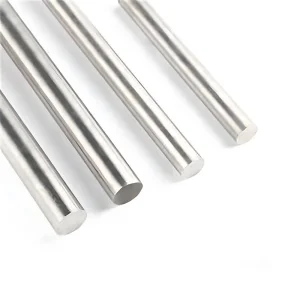
In the modern manufacturing landscape, the procurement of OEM Stainless Steel Wire represents a critical node in the supply chain for industries ranging from automotive and aerospace to medical devices and construction. As an experienced growth director, I observe that the global market is shifting from mere commodity acquisition to a "solution-oriented" procurement model. Enterprises no longer just seek steel; they seek metallurgical performance, surface integrity, and lifecycle durability.
Stainless steel wire production is currently undergoing a paradigm shift driven by Industry 4.0. The demand for 304, 316L, and high-nickel alloy wires has spiked due to their superior resistance to corrosion, extreme temperature stability, and fatigue strength. Global manufacturing hubs, particularly in Asia, have advanced their cold-drawing and annealing processes, allowing for tighter tolerances (often within ±0.005mm) that were previously unattainable.
To maintain a competitive edge, manufacturers are focusing on three core pillars of technical evolution:
Procuring from a top-tier OEM supplier requires more than a datasheet—it requires a commitment to regulatory compliance. Responsible manufacturers must demonstrate adherence to:
Years Industry Experience
Global Industrial Partners
Quality Compliance Rate
Technical Support
Q: What is the main difference between 304 and 316L stainless steel wire?
A: 304 is the standard austenitic grade with good corrosion resistance. 316L contains molybdenum, offering significantly better resistance to pitting corrosion in chloride-rich environments, making it ideal for marine and chemical applications.
Q: How do you ensure the quality of OEM wire production?
A: We utilize multi-stage quality control, including tensile testing, chemical composition analysis via spectrometer, and dimensional tolerance checks using laser micrometers.
Q: Can you accommodate custom wire gauges?
A: Yes, as an OEM supplier, we support custom drawing specifications, including round, flat, or profiled cross-sections tailored to your exact mechanical requirements.