 Baimaoxing
Baimaoxing
Baimaoxing
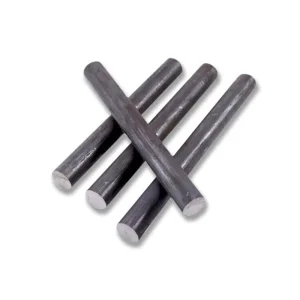
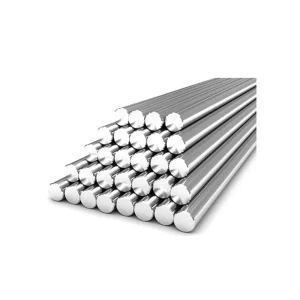
In the realm of advanced manufacturing and structural engineering, 4340 Alloy Steel stands as a pinnacle of metallurgical achievement. As a nickel-chromium-molybdenum alloy steel, it is renowned for its exceptional toughness, high fatigue strength, and deep hardenability. For procurement professionals and engineers, identifying the right OEM 4340 Alloy Steel Bar Supplier is not merely about finding a vendor—it is about securing a supply chain partner capable of meeting stringent aerospace, automotive, and heavy-machinery standards.
AISI 4340 steel is versatile, often used in applications requiring high tensile strength and impact toughness. Its chemical composition—specifically the integration of Nickel (1.65–2.00%) and Chromium (0.70–0.90%)—enables it to maintain structural integrity under extreme stress. Unlike standard carbon steels, 4340 exhibits remarkable performance in section sizes up to 10 inches, making it the material of choice for crankshafts, axles, heavy-duty gear systems, and aerospace structural components.
The global steel industry is undergoing a digital transformation. Modern buyers are shifting from reactive purchasing to data-driven supply chain management. Key trends include:
Sourcing 4340 Alloy Steel globally requires a robust strategy. Companies must balance cost-efficiency with risk mitigation. As a premier OEM 4340 Alloy Steel Bar Supplier, our approach centers on a Macro-Industrial Solution Framework that includes:
We leverage multi-node distribution channels to ensure that fluctuations in raw material availability do not disrupt your production line. Our inventory management systems are optimized for both batch production and small-volume custom orders.
Global standards are non-negotiable. Whether you are operating in the North American, European, or Asian markets, our products conform to ASTM A29, AISI, and international ISO quality standards. We provide non-destructive testing (NDT), including ultrasonic and magnetic particle testing, to ensure zero-defect material delivery.
The future of 4340 alloy lies in micro-alloying and precision heat treatment technologies. We are investing in R&D to provide tempered martensitic structures that offer even greater ductility without sacrificing hardness. As industry requirements evolve toward carbon neutrality, our manufacturing processes are being optimized to reduce energy consumption during the forging and heat-treatment phases.
A: While both are alloy steels, 4340 contains a higher nickel content. This provides superior toughness and deep hardenability, allowing 4340 to be hardened uniformly through thicker sections compared to 4140.
A: Yes, but it requires pre-heating and post-weld stress relieving to prevent cracking, given its high hardenability. We recommend professional engineering consultation before welding critical components.
A: We employ a comprehensive Quality Management System (QMS) compliant with ISO 9001:2015. Every batch comes with a certified Mill Test Report (MTR) detailing chemical composition and mechanical properties.
A: Absolutely. Our facility is equipped with precision cold saws and grinding machines to provide cut-to-length 4340 bars tailored to your exact specifications, reducing your on-site machining overhead.