 Baimaoxing
Baimaoxing
Baimaoxing
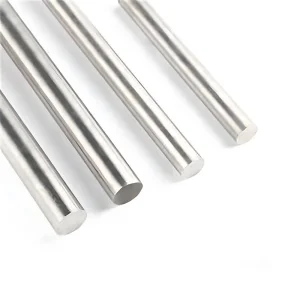
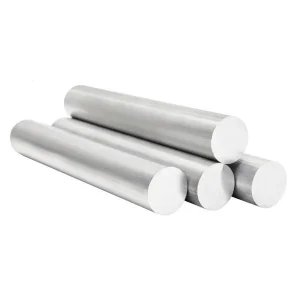
In the complex landscape of metallurgical engineering, 321 Stainless Steel represents a pivotal advancement. As an austenitic, titanium-stabilized chromium-nickel steel, it is engineered to thrive where conventional grades fail. Our commitment as a leading OEM 321 Stainless Steel Round Steel Manufacturer is built on the foundation of providing material solutions that ensure structural integrity in high-temperature, highly corrosive environments.
Unlike 304 stainless steel, 321 is stabilized by the addition of titanium. This specific chemical composition—incorporating titanium at five times the carbon content—prevents the precipitation of chromium carbides at grain boundaries during welding or service in the 427–816°C temperature range. This phenomenon, known as "sensitization," is the primary cause of intergranular corrosion. By eliminating this risk, 321 stainless steel becomes the gold standard for heavy-duty industrial applications.
The global market for high-performance steel, specifically 321 round bars and profiles, is witnessing a massive shift driven by the energy transition and aerospace expansion. As industries move toward hydrogen-based energy and hyper-efficient power generation, the necessity for materials that can withstand "creep" and thermal stress has never been higher.
Current market analysis indicates that the Asia-Pacific region, led by manufacturing hubs in China, continues to dominate the supply chain. However, quality differentiation is the new competitive frontier. Buyers are moving away from commodity-grade steel toward certification-backed, traceability-enhanced stainless steel that meets international standards like ASTM A240/A276 and ASME Section II.
Our 321 stainless steel round bars are not just products; they are critical components in:
Looking ahead, the roadmap for 321 stainless steel manufacturing is deeply intertwined with Industry 4.0. At our factories, we are implementing:
We provide more than raw material; we provide macro-solutions. Understanding that supply chain disruptions are the greatest risk to industrial timelines, we offer:
The core difference lies in the titanium stabilization. 321 contains titanium, which prevents chromium carbide precipitation during welding. This makes 321 superior for welded structures that will be exposed to high heat (427°C–816°C), where 304 would be susceptible to intergranular corrosion.
Like other austenitic stainless steels, 321 is typically non-magnetic in the annealed condition. However, it may become slightly magnetic after heavy cold working, which is a normal metallurgical response to stress-induced martensite formation.
Yes. As an OEM manufacturer, we offer full customization. Our facility handles precision cutting (1-6m), centerless grinding, and polishing to meet specific H-tolerance requirements for automated manufacturing lines.
321 maintains excellent toughness and ductility at cryogenic temperatures, making it a reliable choice for liquid gas storage and cryogenic piping systems, alongside its high-temperature benefits.