 Baimaoxing
Baimaoxing
Baimaoxing
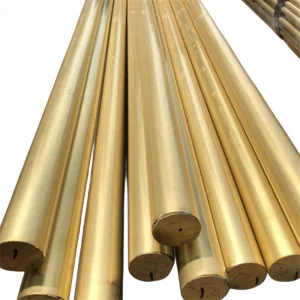
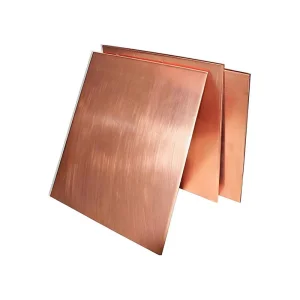
In the realm of advanced manufacturing and electrical engineering, the importance of material science cannot be overstated. Among the critical components driving industrial innovation, Annealed Copper Bars stand out as the backbone of high-performance conductive applications. As a premier OEM manufacturer, we delve deep into the technical, economic, and practical facets of this essential material.
Annealing is a heat treatment process that alters the physical and chemical properties of copper to increase its ductility and reduce its hardness. During the process, copper bars are heated to a specific temperature and then cooled slowly. This allows the internal crystal structure of the metal to reform, eliminating dislocations and grain boundaries that cause brittleness.
For manufacturers and suppliers, providing "annealed" copper is a mark of quality. An annealed copper bar offers superior electrical conductivity, making it the preferred choice for transformers, switchgear, and busbar systems. At our production facilities, we utilize controlled annealing atmospheres to ensure the copper retains its purity and integrity, delivering a product that is not only highly conductive but also easy to machine, bend, and form without cracking.
The global industrial landscape is undergoing a massive shift towards electrification and renewable energy integration. From EV charging infrastructure to grid-scale energy storage, the demand for high-quality copper is skyrocketing. Annealed copper bars, specifically, are experiencing a renaissance. As industries prioritize miniaturization and efficiency, the need for materials that offer high conductivity-to-weight ratios has become paramount.
Furthermore, international standards (such as ASTM, DIN, and JIS) are tightening. Procurement teams at major global enterprises are increasingly auditing their suppliers, not just for price, but for E-E-A-T (Experience, Expertise, Authoritativeness, and Trustworthiness). Companies now seek partners who can provide certified, trace-marked copper bars that meet stringent sustainability and quality benchmarks.
When sourcing OEM Annealed Copper Bars, Chinese manufacturers have emerged as global leaders, primarily due to an unmatched ecosystem of supply chain integration and technological optimization. At Shandong Baimaoxing Iron and Steel Co., Ltd., we combine traditional manufacturing prowess with modern Industry 4.0 standards.
Modern Chinese factories are no longer just manual production hubs. They are high-tech facilities utilizing automated CNC machining, precision rolling, and advanced furnace technology. This ensures that every annealed copper bar produced meets exact tolerances, reducing the need for costly secondary processing by our clients.
Our ability to scale production allows us to cater to both specialized niche prototypes and massive infrastructure projects. By leveraging economies of scale, we provide cost-effective solutions without compromising on material quality. This is the "Information Gain" we provide: we educate our clients on how to optimize material specifications to save costs while maintaining performance standards.
Adherence to global standards like ISO9001:2015 and compliance with RoHS/REACH environmental directives is non-negotiable. Our QA process involves rigorous tensile testing, conductivity testing, and impurity analysis. This level of transparency is what builds the long-term trust required for successful international procurement partnerships.
Annealed copper bars are versatile, but their application requires specific engineering knowledge. Below are the primary industrial environments where our products excel:
Navigating the global metal market as a buyer can be complex. To ensure you are getting the value you pay for, focus on these critical areas during the procurement process:
Q: What is the main difference between hard-drawn and annealed copper bars?
A: Hard-drawn copper has higher tensile strength but is less flexible and has lower conductivity compared to annealed copper, which is softer, more ductile, and optimized for electrical flow.
Q: Can you customize dimensions for specific OEM projects?
A: Yes, as a comprehensive manufacturer, we offer full customization of thickness, width, length, and radius for edges based on your blueprints or CAD files.
Q: Does your copper meet international standards?
A: Absolutely. Our products comply with ASTM, GB, JIS, and DIN standards. We provide MTC (Material Test Certificates) with every shipment.
Q: What is your MOQ (Minimum Order Quantity)?
A: We focus on efficiency and partnership, and we are flexible. We support both large-scale commercial orders and smaller pilot batches for R&D purposes.