 Baimaoxing
Baimaoxing
Baimaoxing
A Copper Rod is a basic material behind many reliable electrical systems. It begins as a solid, conductive bar and is drawn into wires, cables, busbars, or grounding conductors. Its high electrical conductivity allows current to travel with relatively low resistance. This reduces energy loss and limits unnecessary heat during normal operation. In a workshop, its value becomes visible when a rod passes through drawing dies and emerges as a smooth, flexible wire. The process can be controlled closely, supporting consistent diameter and performance.
Copper also combines conductivity with useful mechanical properties. It bends without breaking easily, accepts soldering and crimping, and transfers heat away from electrical connections. These qualities support applications ranging from household wiring to transformers and industrial power equipment. Engineers often select copper according to conductivity, temper, purity, cross-sectional area, and applicable IEC or ASTM requirements. Reliable manufacturers also verify dimensions and electrical resistance through documented testing.
Still, copper is not a perfect choice.
It is heavier and often more expensive than aluminum. Its surface can also oxidize, which may affect poorly prepared connections over time. Good design therefore requires suitable terminals, controlled tightening, insulation, and regular inspection where conditions are demanding. A thoughtful explanation should avoid treating Copper Rod as a universal solution. Temperature, installation space, current capacity, budget, and environmental exposure all influence the final decision. Understanding these trade-offs explains why copper remains widely used while leaving room for other conductive materials.
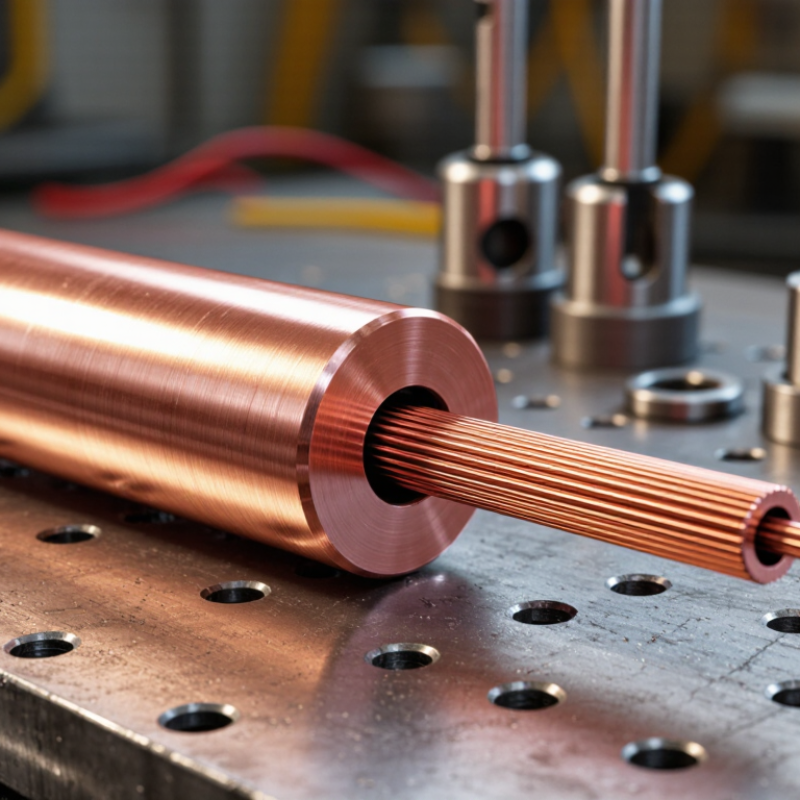
Copper Rod: Definition and Role in Electrical Systems
A copper rod is a solid, cylindrical conductor made from refined copper. It carries electrical current through switchgear, grounding networks, busbar supports, and equipment connections. Copper is widely selected for its high electrical conductivity and low resistance. It also transfers heat efficiently during normal operation. In practical installations, a properly sized rod can reduce energy loss and limit unwanted temperature rise. Its surface accepts machining, bending, threading, and joining with relative ease. These features support reliable electrical assembly.
Copper rods also provide mechanical strength. They can connect conductive parts while tolerating vibration, thermal expansion, and moderate fault forces. Engineers still need to check diameter, purity, insulation clearance, and current capacity. A thicker rod is not automatically safer. Poor connections can create hot spots, even when the copper itself is suitable. Field inspections often find that loose fasteners or oxidation cause more trouble than material choice. That detail deserves attention.
Tips: Keep the rod clean, dry, and free from sharp damage. Match its size to the expected current and installation temperature. Use suitable joining methods, then inspect contact pressure regularly. Never rely on appearance alone. A bright surface may hide a weak connection. Testing resistance and temperature can reveal problems early. Specifications should be reviewed by a qualified electrical professional, because local conditions can change performance.
| Data Category | Parameter | Reference Value or Description | Role in Electrical Systems |
|---|---|---|---|
| Definition | Copper rod | A solid, elongated copper product with a round or other specified cross-section. | Serves as a conductive starting material for wires, cables, busbars, terminals, and electrical components. |
| Electrical Property | Resistivity at 20 °C | Approximately 0.01724 Ω·mm²/m for high-conductivity annealed copper. | Low resistivity reduces voltage drop and I²R power losses during current transmission. |
| Electrical Property | Electrical conductivity at 20 °C | Approximately 58 MS/m, equivalent to about 100% IACS for annealed copper. | Allows efficient current flow through conductors and connection points. |
| Thermal Property | Thermal conductivity | Approximately 400 W/(m·K) for pure copper near room temperature. | Helps conduct heat away from electrical joints, busbars, and current-carrying parts. |
| Physical Property | Density | Approximately 8.96 g/cm³ at room temperature. | Provides a compact conductor with high conductivity, although copper is heavier than aluminum. |
| Manufacturing Property | Ductility and formability | Copper can be drawn, bent, rolled, and formed without easily fracturing when properly processed. | Supports the production of fine wires, shaped conductors, terminals, and connection components. |
| Mechanical Property | Strength after cold working | Cold drawing increases strength and hardness but generally reduces ductility and may slightly lower conductivity. | Allows the conductor to be selected for either flexibility or greater mechanical stability. |
| Temperature Property | Melting point | Approximately 1,085 °C for pure copper. | Provides a high-temperature processing range, while actual operating limits depend on insulation, joints, and installation conditions. |
| Corrosion Performance | Atmospheric corrosion resistance | Copper develops a protective oxide or patina layer in many environments. | Supports long service life in grounding systems, conductors, connectors, and electrical infrastructure. |
| Typical Dimension | Wire-rod diameter | Approximately 8 mm is a common nominal diameter for continuously cast copper wire rod; sizes vary by specification. | Provides a practical feedstock for subsequent drawing into electrical wire and cable conductors. |
| Common Application | Power conductors and cables | Rod is drawn into smaller diameters and stranded or solid conductors. | Carries power and control signals with relatively low electrical losses. |
| Common Application | Busbars and distribution equipment | Copper is formed into rectangular, round, or customized current-carrying sections. | Provides low-impedance paths for high currents in switchboards, panels, and power distribution assemblies. |
| Common Application | Grounding and bonding | Copper rods and conductors are used where a durable, conductive connection to earth or between metallic parts is required. | Helps provide a low-impedance path for fault and lightning currents; design must comply with applicable codes. |
| Design Consideration | Current-carrying capacity | No single ampacity applies to all copper rods; capacity depends on cross-sectional area, temperature rise, insulation, spacing, and cooling. | Ensures safe conductor sizing and prevents excessive heating during operation. |
| Sustainability | Recyclability | Copper can be recycled repeatedly with much of its useful electrical performance retained when properly processed. | Supports material recovery and reduces the need for new primary copper in future electrical products. |
It conducts electricity efficiently and helps limit resistive energy loss. It also bends readily into wire and formed parts. Not perfect, though.
Copper resistance rises as its temperature increases. Current, conductor size, and ventilation must be considered together. Heat still matters.
It passes through progressively smaller dies to become fine wire. A clean, even surface helps reduce defects during this process.
They can become cable wire, motor windings, transformer leads, busbars, terminals, and conductive links. Each use needs suitable dimensions and secure connections.
Scratches or uneven areas can become weaknesses during drawing. At connections, oxidation or dirt may increase resistance. Small details matter.
Check conductivity, purity, diameter, temper, surface condition, and dimensional tolerances. Request test results for each production lot when possible.
No. Soil conditions, mechanical strength, temperature, and corrosion risks can affect suitability. The design should account for the actual installation.
They can create extra resistance and heat, even when the copper itself is highly conductive. A clean contact surface and controlled tightening help, but inspection is still needed.
Copper Rod is a fundamental material in electrical systems because it combines excellent conductivity, mechanical strength, and reliable performance. Its definition covers a solid, cylindrical form of copper designed to carry electrical current or serve as a connection and structural conductor. Copper transfers electricity efficiently because its free electrons can move with relatively low resistance, helping reduce energy loss, heat generation, and voltage drop. It also offers good thermal conductivity, corrosion resistance, ductility, and ease of fabrication, making it suitable for demanding electrical environments.
Common applications include grounding systems, busbars, switchgear connections, transformer components, motor assemblies, and power distribution equipment. When selecting a Copper Rod, engineers should consider electrical conductivity, diameter, length, temperature conditions, mechanical load, surface quality, and resistance to corrosion. The appropriate choice depends on the required current capacity, installation environment, and connection method. By balancing these factors, Copper Rod can provide safe, stable, and durable performance across a wide range of electrical applications.
