 Baimaoxing
Baimaoxing
Baimaoxing
Welded pipes play a crucial role in multiple industries, providing reliable solutions for various applications. According to John Smith, a leading expert in the welded pipe sector, “Welded pipes are essential for modern infrastructure.” His insights highlight the importance of these materials in construction and energy sectors.
Welded pipes are manufactured by welding together steel plates or strips, making them strong and versatile. They can handle high pressures, making them ideal for transporting fluids and gases. Industries like oil and gas, water supply, and manufacturing heavily rely on welded pipes. These products also contribute to cost efficiency in projects, reducing material waste.
However, challenges exist in choosing the right type of welded pipe. Not all welded pipes meet the same standards. Understanding the specific needs of a project is vital for optimal performance. Proper quality control and adherence to industry standards must be prioritized to avoid potential failures. Knowledge and expertise in the welded pipe industry are essential for making informed decisions.
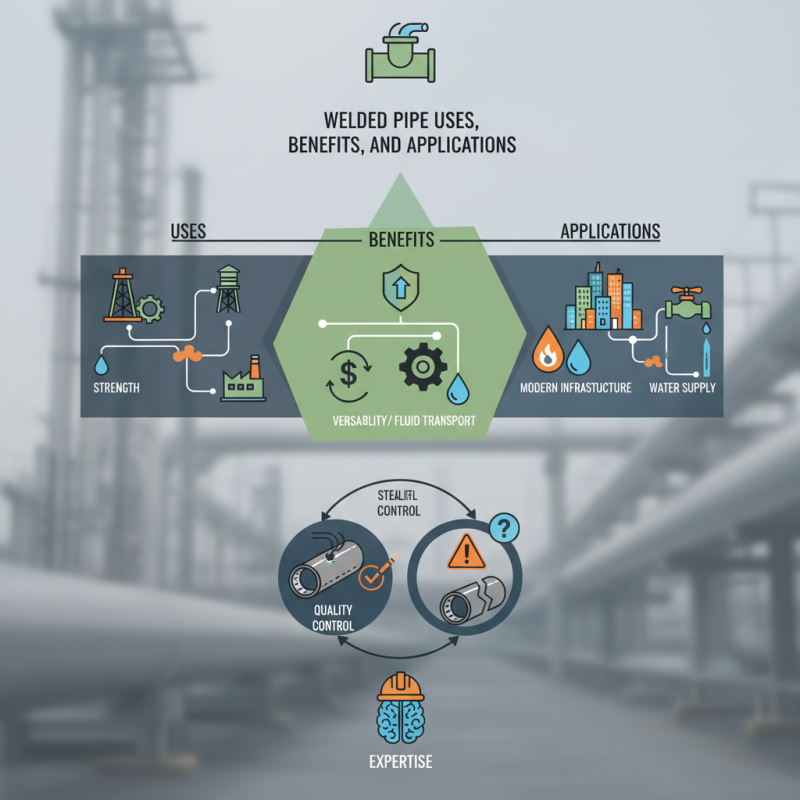
Welded pipe is a vital component in various industries, known for its strength and reliability. It is produced by joining metal pieces through welding, ensuring a continuous structure. This method allows for the creation of pipes in different diameters and wall thicknesses, catering to specific application needs. According to industry reports, welded pipes can withstand high pressure and temperatures, making them suitable for oil and gas applications. In fact, the global demand for welded pipes reached approximately 60 million metric tons in 2022, highlighting their increasing importance.
Characteristics of welded pipes include a smooth inner surface, which reduces turbulence and enhances fluid flow. The welding process also allows for better control over the dimensions, ensuring uniformity in production. However, not all welded pipes are created equal; the quality can vary based on the welding technique and materials used. The American Society for Testing and Materials (ASTM) outlines various standards, emphasizing the need for rigorous testing to guarantee performance. Despite advancements, some welded pipes may still face issues such as corrosion or joint failure, necessitating careful inspection and maintenance.
Understanding these characteristics is crucial for selecting the right type of welded pipe for specific projects. Industries such as construction, automotive, and energy deeply rely on these materials. They offer significant benefits, including cost-effectiveness and versatility. As technology evolves, new techniques may further enhance the reliability of welded pipes. Yet, constant scrutiny and improvements are essential to mitigate potential weaknesses and uphold safety standards in their applications.
: Steel, aluminum, and PVC are commonly used materials. Steel, notably carbon and stainless, accounts for most production.
Steel offers durability, strength, and corrosion resistance. These qualities make it ideal for various applications.
Aluminum pipes are lightweight, reducing overall weight by up to 50%. This is especially beneficial in aerospace and automotive sectors.
Welded pipes support structures and frameworks, providing robust and cost-effective solutions for buildings and bridges.
While resistant to pressure and corrosion, poor weld execution can create weaknesses. Routine inspections are essential for reliability.
These pipes withstand aggressive substances, enhancing operational safety. However, inadequate materials or methods can lead to leakage.
Regular maintenance is crucial for longevity, preventing costly failures. Consistent inspections enhance safety and system integrity.
Visual inspections for wear and corrosion should occur annually. Non-destructive testing can reveal subsurface defects.
Resource constraints can lead to inadequate inspections. Studies show that many pipes may not receive necessary maintenance.
Allocating resources for regular maintenance and engaging trained professionals ensures compliance with industry standards.
Welded pipe is a crucial component in various industrial applications due to its unique characteristics and benefits. Defined by its formation method, welded pipes are created by joining metal pieces through welding, resulting in a strong, durable product. Common materials used in their manufacturing include carbon steel, stainless steel, and alloy steels, making them suitable for a diverse range of environments and uses.
Welded pipes are extensively utilized across industries such as oil and gas, construction, and water management, thanks to their reliability and structural integrity. They offer significant advantages over other types of pipes, including enhanced strength, reduced material costs, and the ability to create long lengths without joints. Regular maintenance and inspection practices are essential to ensure the longevity and safe operation of welded pipe systems, reinforcing their role as a vital element in modern infrastructure.
