
Baimaoxing Baimaoxing

7 Tips for Choosing Square Tube

Time:2026-11-03 Author:Sienna
0%

Choosing Square Tube is not just a matter of picking a size from a catalog. Wall thickness, steel grade, finish, and cutting tolerance can all affect how a tube performs in a finished project. A frame supporting light shelving has different needs from one exposed to weather or repeated loads. Small differences matter.

A useful selection process starts with the job itself. Note the required outside dimensions, expected load, connection method, and working environment. Then compare material specifications and confirm that the supplier can provide clear product data. Check the tube for dents, uneven corners, and visible coating damage when it arrives. These details can reveal problems before fabrication begins.

There is no universal best option. A heavier wall may add strength, but it can also increase weight, cost, and machining effort. Likewise, a corrosion-resistant finish may be unnecessary indoors, yet valuable where moisture is common. I still find that early estimates can miss one practical detail: how the tube will be joined to the rest of the assembly. Recheck that choice.

The seven tips in this guide help narrow the options without treating a specification sheet as the whole answer. They cover dimensions, material, strength, finish, tolerances, sourcing, and project fit. Use them as a practical checklist, then verify critical requirements with a qualified engineer or the manufacturer’s documentation. A careful choice saves rework.
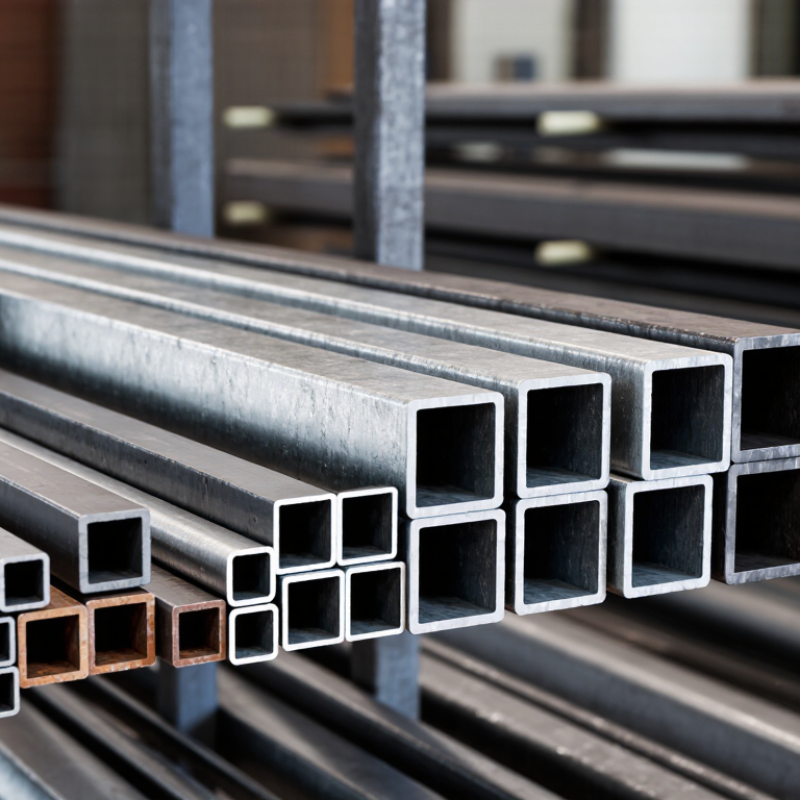
7 Tips for Choosing Square Tube

Understanding Square Tube Materials and Grades

Square Tube Materials and Grades

Choosing square tube starts with its material and the job it must perform. Carbon steel is common for frames and supports because it is strong and widely available. For structural work, ASTM A500 grades are often specified; the exact grade affects minimum strength and suitability. Mechanical tubing, such as tubing made to ASTM A513, serves different fabrication needs. These specifications are not interchangeable. Check the drawing and project requirements before ordering.

Stainless steel can help resist corrosion, but the right grade depends on exposure. Grade 304 suits many indoor and general environments, while 316 offers improved resistance in chloride-rich settings, such as near saltwater. Aluminum is lighter, though its strength and joining behavior vary by alloy and temper.

Details matter. A tube’s wall thickness, corner radius, and finish can affect fit and fabrication, not just its grade. It is easy to focus on a grade number and overlook the certificate, dimensions, or weld requirements. I would verify those details with the supplier and engineer, especially when the tube carries a load or faces moisture. No single material is best for every build.

Matching Tube Dimensions to Project Requirements

7 Tips for Choosing Square Tube
Matching Tube Dimensions to Project Requirements

Square tube dimensions should follow the load path, not just the available shelf stock. A 50 × 50 mm tube may fit a frame neatly, yet its wall thickness and unsupported length affect stiffness and buckling resistance. Measure the clear span, connection space, and expected load before comparing sizes. Fit matters. Leave room for welds, bolts, coatings, and installation tools.

Check section properties, especially area, moment of inertia, and radius of gyration. These values help assess strength and deflection; outside dimensions alone do not. ASTM A500/A500M specifies minimum yield strengths of 46 ksi for Grade B and 50 ksi for Grade C square and rectangular tubing. Those figures describe material minimums, not the capacity of a finished member. ANSI/AISC 360-22 also requires checks for member stability and local slenderness.

Connections can decide whether a chosen size works. A thick tube wall may resist local damage better around a bolted joint, while a narrow face can limit bolt spacing. Compare manufacturer dimension tables with the governing material specification, and confirm actual tolerances before detailing close-fitting parts. I would recheck the design when a span, support, or connection changes; it is easy to overlook one. A structural engineer should verify load-bearing designs, especially where failure could cause injury.

Assessing Wall Thickness and Load Capacity

Wall thickness is not a detail to guess from the outside dimensions. A square tube with a 3 mm wall may look nearly identical to one with a 4 mm wall, yet the difference affects its weight, stiffness, and resistance to local buckling. Measure the actual wall where possible, and check the mill certificate for the specified grade and tolerance. Small differences matter.

ASTM A500/A500M lists minimum yield strengths for square and rectangular tubing of 42 ksi for Grade B and 46 ksi for Grade C. These are material properties, not safe load ratings. AISC’s Steel Construction Manual provides section properties used in member design, including area and moment of inertia. Use those properties with the tube’s span, support conditions, load direction, and connection details. A long, simply supported tube can deflect noticeably even when its steel has not reached yield. That surprises people.

For a shelf frame, for example, a heavy load near the middle can govern differently from the same load spread across several supports. Check both strength and deflection; also account for holes, welds, corrosion, and impact. One imperfect but useful check: compare the measured wall at several points, not just one clean edge. Then have a qualified engineer verify the design load when failure could cause injury or property damage.

7 Tips for Choosing Square Tube - Assessing Wall Thickness and Load Capacity

Tip What to Assess Useful Data or Check Practical Guidance
1. Define the loading condition Identify whether the tube carries axial compression, tension, bending, or a combination of loads. Record the load magnitude, direction, support conditions, and whether it is steady or variable. A tube that works in tension may still buckle under the same compressive force.
2. Check the actual wall thickness Compare specified thickness with the measured thickness and applicable product tolerances. Example nominal wall thicknesses: 0.120 in (3.05 mm), 0.188 in (4.78 mm), and 0.250 in (6.35 mm). Do not assume nominal thickness equals the minimum thickness available at every point; confirm the governing specification and mill documentation.
3. Match tube size to span Consider unsupported length and how the tube is restrained at its ends and along its span. For a simply supported beam with a centered point load, maximum bending moment is approximately load × span ÷ 4. A longer span can increase bending and deflection even when the tube’s wall thickness is unchanged.
4. Screen compression capacity Evaluate member length, end restraint, section properties, and the risk of buckling. Compression buckling depends on effective length and radius of gyration, not just cross-sectional area. Use an applicable structural design standard or qualified engineer for design capacity; a material-yield estimate is not a column rating.
5. Compare section and wall proportions Check whether the flat walls are slender relative to their thickness and may buckle locally. For a square tube with outside width B and wall thickness t, the simple flat-width ratio is approximately (B − 2t) ÷ t. Wider, thinner walls can be more susceptible to local buckling; use code-defined limits for a formal check.
6. Include connections and service conditions Review welds, bolts, holes, end plates, corrosion exposure, and fatigue or impact. Holes and cutouts reduce the effective section; corrosion reduces the remaining wall thickness. The connection or the locally weakened tube wall may govern before the uncut tube section reaches its theoretical strength.
7. Treat quick capacity figures as screening only Use a transparent calculation for an initial comparison, then verify the design case. Illustrative example: a 2 × 2 in tube with 0.120 in walls has a sharp-corner area estimate of 0.902 in². At an assumed 50 ksi yield stress, area × yield stress is about 45.1 kip (200 kN). This is an idealized gross-section yield reference—not an allowable load or a design capacity. It excludes corner geometry, buckling, safety factors, connections, and other design effects.

Calculation note: The example uses the simplified area formula 4t(B − t) and an assumed yield stress of 50 ksi. Actual section properties and design strengths depend on the product standard, material grade, dimensions, tolerances, and loading conditions.

Selecting Finishes for Corrosion Resistance

Selecting a finish starts with the tube’s real environment, not its color. Outdoor square tube near roads faces water, grit, and de-icing salts. Coastal air adds airborne chlorides. Indoor tube can still corrode where condensation collects. Check the exposure category and durability guidance in ISO 12944, then consider maintenance access and expected service life. Small details matter.

Hot-dip galvanizing provides a zinc layer that protects steel, including some damaged areas. Powder coating adds color and a barrier, but scratches can expose steel beneath. A duplex system combines both; it may suit demanding environments, though repairs and preparation need care. For hollow tube, discuss venting, drainage, and internal coverage with the fabricator before specifying a finish. A hidden wet pocket can defeat a good exterior coating. I have a slight reservation here: no finish makes poor drainage harmless.

The 2016 NACE International IMPACT study estimated corrosion costs at US$2.5 trillion annually, about 3.4% of global GDP, and suggested 15–35% could be saved through better corrosion-control practices. Use that as context, not a promise of savings on one project. Ask suppliers for coating thickness, surface-preparation details, and repair instructions. Salt-spray results can help compare samples, but ASTM B117 test hours do not reliably predict years outdoors. Test data needs context. Insist on evidence tied to the exposure and finish you are specifying.

Verifying Standards, Fabrication Needs, and Supplier Quality

7 Tips for Choosing Square Tube

Tip 1: Confirm the required standard for your application and region; structural and general-purpose tubing may have different requirements. Tip 2: Check the steel grade, outside dimensions, wall thickness, and permitted tolerances. Small differences matter. Tip 3: Request available inspection records or material certificates, and check that grade and heat details match the order. Paperwork should be traceable.

Tip 4: Consider fabrication before buying. A thick wall can affect cutting, drilling, bending, and welding; confirm the tube suits your tools and joint design. Tip 5: Check corner radius and straightness, especially where pieces must fit tightly or meet flush. A sample can help. It is not a guarantee, though. Tip 6: Specify the finish, such as a plain or coated surface, and ask how it will be protected during transport and storage.

Tip 7: Assess the supplier’s quality process, not just the quoted price. Ask how dimensions are checked, how defects are handled, and whether batch records are available. Compare responses against your written specification. A neat brochure is not enough. If an answer is vague, pause and clarify it before placing an order; I’d rather resolve one awkward question early than discover a mismatch during fabrication.

FAQS

How do I choose a square tube material?

Match the material to the environment and job. Carbon steel suits many frames and supports. Stainless steel can resist corrosion, while aluminum weighs less. Details matter.

What is the difference between structural and mechanical tubing?

They may follow different specifications and serve different fabrication needs. Structural tubing often uses A500 grades; mechanical tubing may use A513. Check the project drawings.

When should I choose 304 or 316 stainless steel?

Grade 304 suits many indoor and general environments. Grade 316 offers better resistance in chloride-rich places, such as near saltwater. Exposure still matters.

Why does wall thickness matter?

A 3 mm wall and a 4 mm wall can look nearly identical. The thicker wall usually adds weight and can improve stiffness and resistance to local buckling. Measure more than one spot.

Does a tube’s yield strength tell me its safe load?

No. Yield strength describes a material property, not a safe load rating. Span, supports, load direction, and connections also affect performance. Ask an engineer when failure could cause harm.

What should I check before ordering square tube?

Confirm the standard, grade, outside dimensions, wall thickness, and tolerances. Request traceable material records. Check that the heat and grade details match your order.

Which details affect fabrication and fit?

Wall thickness affects cutting, drilling, bending, and welding. Corner radius and straightness matter when pieces must meet flush. A sample may help, but it is not a guarantee.

How can I assess a supplier’s quality process?

Ask how dimensions are checked, how defects are handled, and whether batch records are available. Compare answers with your written requirements. A polished brochure is not enough. I might still overlook something, so clarify vague answers early.

Conclusion

Choosing the right Square Tube starts with understanding the materials and grades available, since each option offers different strengths, weight, and suitability for a project. Compare these properties with the intended use and working environment before making a selection. Next, match the tube’s outside dimensions to space, fit, and design requirements, then assess wall thickness in relation to expected loads and the level of support needed. A tube that is too light may not provide adequate capacity, while one that is unnecessarily heavy can add cost and weight.

Consider the finish as well, especially when moisture, chemicals, or outdoor exposure may cause corrosion. Confirm that the product meets relevant standards and can be fabricated using the cutting, welding, or joining methods required for the project. Finally, review supplier information for clear specifications, consistent quality, and dependable material documentation. These steps help ensure the selected tube is practical, durable, and suited to its intended application.

Sienna

Sienna

Sienna is a skilled marketing professional with a deep expertise in our company’s core products and services. With a passion for innovation and detail, she plays a pivotal role in crafting insightful blog posts that not only highlight the unique features of our offerings but also provide valuable......