
Baimaoxing Baimaoxing

Top Section Steel Suppliers for Global Buyers

Time:2026-10-19 Author:Oliver
0%

Choosing the right Section Steel supplier can shape a project’s safety, schedule, and final cost. Global buyers need more than attractive quotations. They need consistent dimensions, verified steel grades, dependable production capacity, and clear export documentation. A strong supplier should provide mill test certificates, traceable batch numbers, and evidence of quality controls. These details matter when beams arrive at a busy fabrication yard.

This guide examines leading Section Steel suppliers through practical purchasing criteria. It considers product range, manufacturing experience, inspection systems, delivery performance, and international communication. Buyers should also review standards such as ASTM, EN, JIS, or equivalent project requirements. Certification alone is not enough. Factory audits, sample inspections, and independent testing can reveal important differences. Small details count. Corner profiles, surface marks, packing methods, and cutting accuracy may affect installation.

No supplier is perfect. Even experienced manufacturers can face delays, material shortages, or unclear technical responses. That is why responsible sourcing requires comparison, documented specifications, and realistic discussions about risk. Price deserves attention, but it should not dominate the decision. A lower offer may hide weaker traceability or higher handling costs. This overview aims to support informed judgment, not promote one universal choice. Regional availability, project conditions, and buyer experience can change the final ranking. A careful shortlist remains useful, but it should be tested against current evidence.
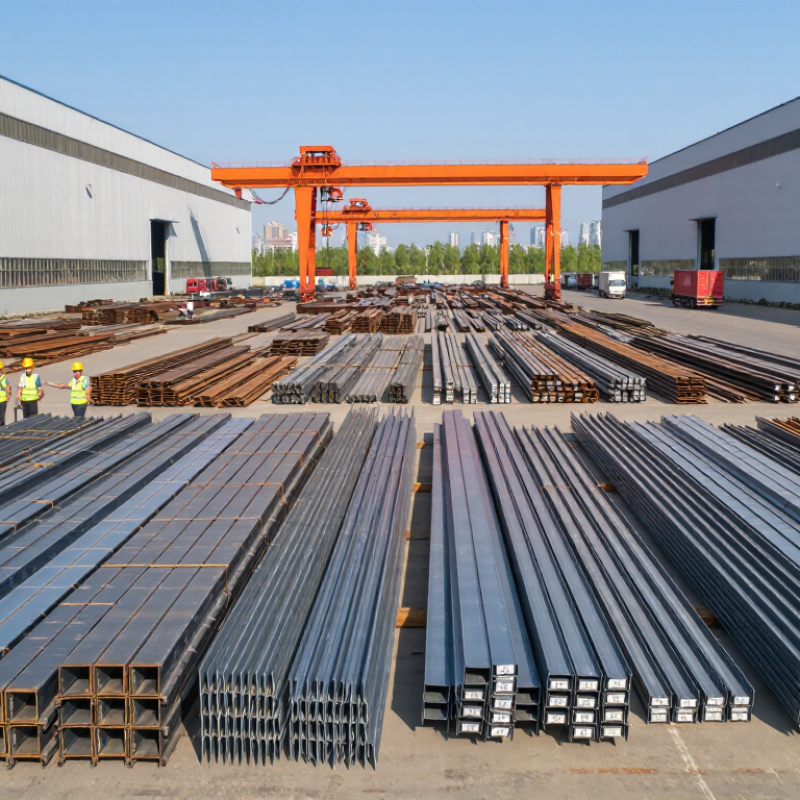
Top Section Steel Suppliers for Global Buyers

What Section Steel Is and Why Global Buyers Need It

Top Section Steel Suppliers for Global Buyers

What Section Steel Is and Why Global Buyers Need It

Section steel refers to rolled steel products shaped for structural performance. Common profiles include H-beams, I-beams, channels, angles, and hollow sections. Each shape manages weight, bending, and load transfer differently. A wide flange can support heavy loads across industrial buildings. A hollow section can offer strength with a cleaner appearance. The choice depends on design loads, connection methods, corrosion exposure, and local construction rules.

Global buyers need section steel because infrastructure projects demand consistent performance across long distances and changing conditions. Reliable material certificates confirm chemical composition, tensile strength, yield strength, and dimensional accuracy. Procurement teams should also check production capacity, inspection procedures, packing methods, and export documentation. Small dimensional errors can complicate welding or installation. That assumption is often underestimated. In practice, a cheaper quotation may create higher cutting, fitting, and delay costs. Requirements should be confirmed before production, not after shipment.

Tips: Define the profile, grade, length, tolerance, and surface condition clearly. Request recent test reports and independent inspection options when project risk is high. Compare suppliers by total delivered cost, not only mill price. Also review loading photographs and moisture protection details. Steel can arrive safely, yet still need extra sorting. That possibility deserves attention.

Top Section Steel Suppliers for Global Buyers

What Section Steel Is and Why Global Buyers Need It

Standard IPE sections are hot-rolled structural steel profiles commonly used in buildings, bridges, industrial frames, and infrastructure. The chart compares nominal mass per metre, a key purchasing and freight-planning metric for global buyers. Larger sections generally provide greater load-carrying capacity but require higher material, handling, and transportation costs.

Data source: nominal masses for IPE sections according to EN 10365.

How to Assess Section Steel Suppliers Worldwide

When assessing section steel suppliers worldwide, start with production evidence, not attractive catalogs.

The World Steel Association reported about 1.89 billion tonnes of crude steel production in 2023. This scale creates choice, but also uneven quality. Request mill test certificates, heat numbers, chemical analysis, and mechanical results for each batch. Confirm that dimensions match the required standard. A certificate without traceability is weak evidence.

Audit the supplier’s process before comparing prices. Review rolling equipment, calibration records, inspection frequency, and nonconformance handling. Ask for recent delivery records, not selected success stories. Independent testing can verify yield strength, tensile strength, impact performance, and coating thickness. ISO 9001 certification helps, but it does not replace product inspection.

Small details matter. A two-millimeter deviation can disrupt fabrication and increase site waste.

Sustainability and logistics also reveal supplier reliability.

The International Energy Agency estimates that steelmaking produces roughly 7–9% of global energy-system emissions. Ask for energy-use data, recycled content, emissions boundaries, and credible verification. Check port access, packaging, export documents, insurance, and delivery terms. Compare total landed cost, not only the quotation.

My checklist is still imperfect; weather delays and port congestion can defeat careful planning. Therefore, use a trial order with independent inspection before signing a large contract.
Be cautious with unusually low prices. They may hide weaker tolerances, uncertain origin, or expensive rework.

Key Product Types, Grades, and Quality Standards

Global buyers often source section steel in several forms: H-beams, I-beams, channels, equal angles, and hollow sections. Each type serves a different structural need. H-beams suit heavy frames, while channels work well for supports and edge members. Angles are practical for bracing. Hollow sections can reduce weight and present clean surfaces.

Grade selection depends on design loads, welding requirements, and climate. ASTM A36 remains common for general fabrication. ASTM A572 Grade 50 offers higher yield strength for demanding structures. European projects may specify S275 or S355 under EN 10025. SS400 is widely recognized in some Asian markets.

These grades are not interchangeable without engineering review. That detail is often missed.

Quality depends on evidence, not polished sales language.

Buyers should request mill test certificates showing chemical composition, yield strength, tensile strength, elongation, and heat numbers. Dimensional checks should follow the applicable product standard, such as ASTM A6 or EN 10219 for selected products. ISO 9001 certification can support process control, but it does not prove every batch is acceptable. Third-party inspection may verify thickness, straightness, surface condition, and ultrasonic results. Small defects matter. A beam with uneven flanges can complicate welding and installation. Suppliers should also explain coating methods, packing, marking, and traceability. In practice, documentation is sometimes incomplete, so buyers need to question assumptions before approving shipment.

Pricing, Production Capacity, and Customization Factors

Top Section Steel Suppliers for Global Buyers

Pricing, Production Capacity, and Customization Factors

Steel pricing rarely follows one simple index. Buyers should compare the mill quotation with regional coil prices, freight, energy surcharges, and currency movements. World Steel Association data reports approximately 1.89 billion tonnes of crude steel production in 2023. That scale creates sharp differences between export regions. A low base price may hide higher inland transport costs or longer delivery times.

Production capacity also deserves practical verification. OECD steel market reviews place global steelmaking capacity above 2.4 billion tonnes in recent years. Large capacity does not always mean reliable supply. Ask for monthly output, furnace schedules, maintenance periods, and recent shipment records. A supplier producing 80,000 tonnes monthly may still struggle with a sudden 5,000-tonne order. That detail matters.

Customization can change the final price more than buyers expect. Grade chemistry, thickness tolerance, surface finish, cutting, coating, and packaging all affect production time. The International Energy Agency notes that iron and steel production generates roughly 7% of global energy-related emissions. Buyers should request material certificates, heat numbers, inspection plans, and emissions information where relevant. These documents support traceability and reduce costly disputes. Yet specifications are not always perfect. Some buyers overdesign products and pay for unnecessary tolerances. A trial order, independent inspection, and clear rejection terms often reveal weaknesses before full-scale purchasing.

Shipping, Compliance, and Supplier Selection Considerations

Top Section Steel Suppliers for Global Buyers

Shipping decisions can change a steel order’s real cost. The World Steel Association reported 1.839 billion tonnes of crude steel production in 2024. This scale creates intense competition, but also uneven export capacity. UNCTAD’s Review of Maritime Transport 2024 recorded renewed pressure on shipping networks and freight reliability. Delays compound quickly. Buyers should compare port distance, sailing frequency, container availability, and cargo insurance before approving a supplier. A supplier offering clear packing lists, corrosion protection, and realistic lead times deserves more attention than a cheaper quotation.

Compliance requires evidence, not confident emails. Request mill test certificates, heat numbers, chemical analysis, mechanical results, and product-standard references. Match every document with the physical bundle or coil. For European shipments, importers should review Carbon Border Adjustment Mechanism requirements and embedded-emissions data applicable in 2026. Other markets may require different certificates, labeling, or inspection rules. Use an independent inspection before loading when the order is technically sensitive. Polished paperwork can still hide gaps.

Supplier selection should include a documented scorecard. The World Bank’s Logistics Performance Index 2023 evaluates customs, infrastructure, logistics competence, tracking, and delivery timeliness across 139 economies. These factors help explain why two similar suppliers produce different landed costs. Check production capacity, quality records, complaint handling, and backup transport routes. A trial shipment can expose weak packaging or inconsistent thickness. I would not treat one successful delivery as proof of reliability. That judgment is often premature. Recheck certificates, shipment history, and corrective-action records before expanding the order.

Top Section Steel Suppliers for Global Buyers - Shipping, Compliance, and Supplier Selection Considerations

A practical comparison framework for evaluating section-steel suppliers, product standards, export documentation, shipping arrangements, and quality controls without relying on company or brand names.

Supplier Category Typical Section-Steel Products Common Material Standards Best-Fit Purchasing Need Shipping and Packing Considerations Compliance and Quality Documents to Request Key Supplier-Selection Checks
Large integrated steel mill I-beams H-beams Channels Angles EN 10025-2 grades such as S275 and S355;
ASTM A36 and ASTM A572 Grade 50;
JIS G3101 SS400
High-volume infrastructure, industrial construction, bridges, warehouses, and long-term procurement programs. Confirm mill-length availability, bundle weight, maximum permissible piece length, vessel compatibility, and corrosion protection during ocean transit. Mill test certificate, heat or cast number, chemical analysis, mechanical test results, dimensional report, packing list, commercial invoice, and certificate of origin where required. Verify production capacity, rolling-mill tolerances, traceability from heat number to bundle, export history, and ability to support third-party inspection.
Specialized structural-section producer Heavy H-sections Wide-flange beams Tapered sections EN 10365 dimensions;
ASTM A6 dimensional requirements;
project-specific grades and section tolerances
Heavy-load columns, platforms, factories, energy facilities, and engineered steel structures. Confirm section depth, flange width, unit mass, bundle lifting points, port draft limitations, and whether break-bulk or project cargo is more suitable than container transport. Approved drawings, dimensional inspection report, straightness results, ultrasonic testing where specified, welding-related declarations, and material certificates. Compare actual mass per metre, permitted dimensional deviations, available rolling sizes, minimum order quantities, and production lead time.
Regional service center or stockholding distributor Standard beams Channels Equal angles Flat bars ASTM, EN, JIS, or national standards listed on the purchase order and certificate. Smaller quantities, urgent replenishment, mixed-size orders, local delivery, and projects requiring cut-to-length material. Check whether products are supplied in full lengths or cut lengths, how cut pieces are bundled, and whether inland delivery is included in the quoted trade term. Original mill certificate, distributor certificate, cutting list, traceability statement, delivery note, and inspection records for any processing performed. Confirm that certificates identify the original mill and heat number, and distinguish newly produced material from secondary or surplus stock.
Fabrication-oriented steel supplier Welded sections Built-up beams Hollow sections EN 10219 for cold-formed welded hollow sections;
EN 10210 for hot-finished hollow sections;
ASTM A500 where applicable
Structural frames, modular buildings, fabricated assemblies, and projects requiring processing before delivery. Protect exposed edges, separate finished assemblies from loose sections, confirm lifting plans, and verify whether oversized cargo requires special handling or permits. Welding procedure specification, welder qualifications, inspection and test plan, non-destructive examination records, coating report, and dimensional acceptance report. Assess fabrication standards, weld quality controls, coating system compatibility, production drawings, revision control, and repair procedures.
Low-carbon or recycled-content supplier Structural sections Recycled steel products Project-specific grades The required structural standard plus project-specific environmental reporting criteria. Public infrastructure, green-building projects, environmental procurement programs, and buyers with embodied-carbon targets. Request shipment-specific mass data and avoid treating a general environmental statement as proof for a particular batch or order. Environmental product declaration where available, recycled-content evidence, carbon-footprint methodology, material certificate, and chain-of-custody records where specified. Check the reporting boundary, declaration validity, independent verification, calculation method, and whether the data covers the supplied product rather than the whole facility.
Project-approved or specification-driven supplier Beams Columns Channels Angles The exact grade, standard, edition, section designation, and tolerance class stated in the engineering specification. Public works, regulated facilities, seismic projects, and contracts requiring consultant or authority approval. Align packing, marking, delivery sequence, and inspection hold points with the approved method statement and construction schedule. Submittal package, inspection and test plan, manufacturing procedure, heat traceability, independent inspection release, nonconformance records, and final dossier. Confirm prior approval status, document turnaround time, change-control procedure, inspection notice period, and responsibility for rejected material.
Export-focused trading supplier Mixed section sizes Standard grades Multi-origin sourcing The standard and grade must be verified against the original mill certificate and the buyer's technical specification. Buyers seeking consolidated shipments, multi-size orders, or access to several production sources through one commercial contact. Establish the actual loading port, country of origin, container or break-bulk plan, transshipment risk, free-time allowance, and responsibility for export clearance. Original mill certificates, packing list, invoice, bill of lading, certificate of origin, inspection certificate, and any import-specific declarations. Verify the physical supplier, country of origin, sanctions and customs-screening requirements, certificate authenticity, and whether the quoted material is prime quality.
Buyer checklist: Specify the section designation, material grade, applicable standard and edition, length tolerance, surface condition, quantity basis, required certificates, inspection level, packaging method, delivery term, destination port, and applicable import or sanctions requirements before requesting a final quotation.

FAQS

What is section steel?

Section steel consists of rolled profiles designed for structural performance. Common shapes include H-beams, I-beams, channels, angles, and hollow sections.

How should buyers choose a suitable steel profile?

Consider structural loads, bending, connection methods, corrosion exposure, and local construction requirements. A wide flange suits heavy industrial loads. Hollow sections provide strength and a clean appearance.

Which specifications should buyers confirm before production?

Confirm the profile, steel grade, length, tolerance, surface condition, and applicable product standard. Written details prevent expensive cutting and fitting problems.

Which documents should a reliable supplier provide?

Request mill test certificates, heat numbers, chemical analysis, mechanical results, and dimensional records. Match each document with the physical bundle or coil.

Why is independent inspection useful?

Independent inspection can verify yield strength, tensile strength, impact performance, coating thickness, and dimensions. Certificates alone may not prove full traceability.

How should buyers compare supplier prices?

Compare total delivered cost, including cutting, rework, freight, insurance, inspection, and delays. A low quotation may create higher project costs.

What shipping details deserve attention?

Check port distance, sailing frequency, cargo availability, packing lists, moisture protection, insurance, and realistic lead times. Steel can arrive safely but still require sorting.

Should buyers place a large order immediately?

A trial shipment can reveal weak packaging, inconsistent thickness, or slow corrective action. Start small. One successful delivery does not prove lasting reliability.

What sustainability information can buyers request?

Ask about energy use, recycled content, emissions boundaries, and independent verification. Steelmaking has significant emissions, so vague claims deserve careful review.

What is an effective supplier evaluation method?

Use a documented scorecard covering capacity, quality records, complaint handling, logistics, inspection, and backup transport routes. My checklist is imperfect. Recheck important evidence.

Conclusion

Section Steel is a fundamental material for construction, infrastructure, industrial equipment, and large-scale engineering projects because its standardized shapes provide strength, stability, and efficient load distribution. Global buyers should understand the differences among beams, channels, angles, hollow sections, and other profiles, as well as the importance of steel grades, dimensional accuracy, surface condition, and recognized quality standards. A reliable supplier should be assessed through production capabilities, inspection procedures, technical documentation, export experience, and consistent delivery performance.

Beyond product quality, buyers should compare pricing based on grade, size, order volume, processing requirements, and market conditions. Production capacity and customization options are also important when projects require specific dimensions, cutting, drilling, coating, or fabrication. Before placing an order, purchasers should confirm packaging, shipping schedules, certificates, customs documentation, and compliance with destination-market requirements. Careful supplier evaluation helps global buyers balance cost, quality, lead time, and long-term reliability while reducing procurement risks.

Oliver

Oliver

Oliver is a seasoned marketing professional with a wealth of expertise in driving brand awareness and engagement. With a deep understanding of our company's product offerings, he consistently delivers high-quality content that enriches our professional blog. His insights not only shed light on......