 Baimaoxing
Baimaoxing
Baimaoxing
Brass Tube selection is a practical decision with consequences beyond the first purchase order. A tube may look flawless on a sample rack, yet perform poorly if its alloy, wall thickness, or dimensional tolerances do not match the application. For global buyers, supplier evaluation should therefore cover material traceability, production consistency, inspection records, lead times, and export experience—not price alone.
The International Copper Study Group’s World Copper Factbook 2024 reports global refined copper usage of about 26.5 million tonnes in 2023. This figure describes copper broadly, not brass tube demand specifically. That distinction matters: broad market statistics can show the scale of copper use, but they cannot validate an individual manufacturer’s quality or capacity. Buyers still need current mill documentation and application-specific checks.
Small details count. A clean cut edge. A legible test certificate. A supplier who answers a technical question directly. These clues help separate a capable partner from a polished catalogue. One limitation deserves attention: without a verifiable source, assigning a direct quotation to a named brass-tube expert would risk inventing evidence. This introduction therefore makes no unsupported expert attribution. The manufacturer comparison that follows should rely on checkable company information, published specifications, and clearly stated selection criteria. Reliable sourcing is rarely dramatic. It is often careful, repeatable work.
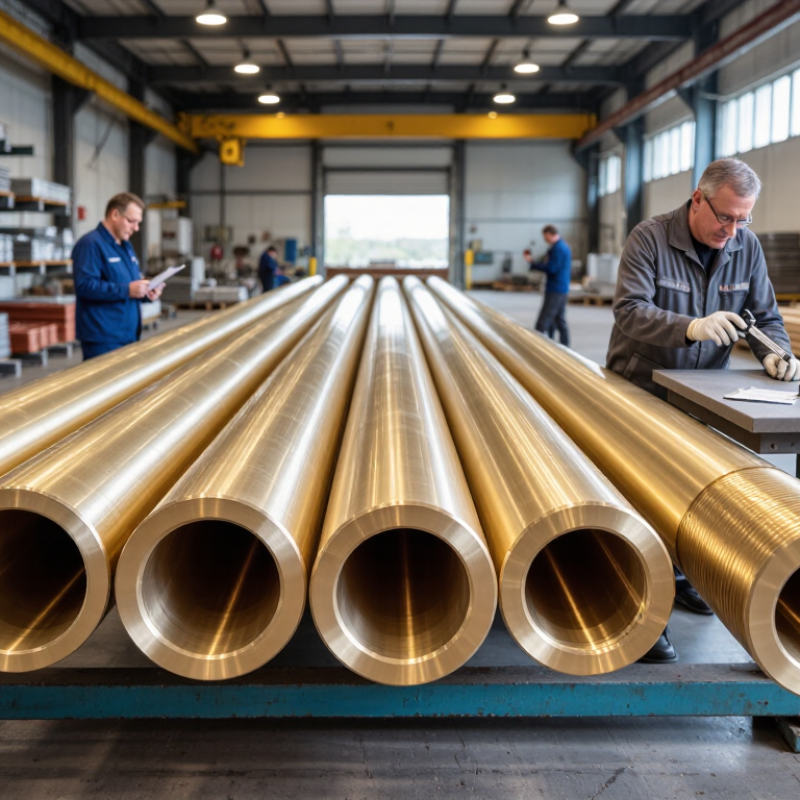
Brass tubes are hollow profiles made mainly from copper and zinc, with small additions of other elements in some grades. Their proportions affect color, strength, machinability, and corrosion behavior. The U.S. Geological Survey’s Mineral Commodity Summaries 2024 estimated global copper mine production at 22 million metric tons in 2023. Copper supply matters because it is a major brass input, though mined copper is not the same as finished tube production.
Production typically begins by melting and alloying the metals, then casting a billet. The billet is heated and pierced or extruded to form a hollow shell. Drawing through dies reduces its diameter and wall thickness. Annealing softens the tube between drawing passes; pickling or other cleaning removes surface oxides. Finally, manufacturers cut, straighten, inspect, and test the product. Small details matter. A slight variation in wall thickness can affect bending, fitting, or heat transfer. Buyers should check the stated alloy, dimensions, temper, and test requirements against the intended use. Standards help, but they do not replace inspection. Even a well-controlled process can leave variation worth discussing with a supplier.
| Buyer Evaluation Dimension | What Brass Tubes Are | How They Are Made | What Global Buyers Should Verify |
|---|---|---|---|
| 1. Product definition | Brass tubes are hollow products made from copper-zinc alloys. They are supplied in forms such as straight lengths or coils, depending on the product and application. | A brass billet or hollow feedstock is formed into a tube, then sized and finished to meet specified dimensions. | Confirm whether the requirement is for tube or pipe, and specify the intended use, delivery form, and applicable product standard. |
| 2. Alloy and composition | Brass composition varies by grade. For example, C26000 is commonly known as cartridge brass and contains about 70% copper and 30% zinc by nominal composition. | Alloying metals are melted and refined to the selected composition before the metal is cast into feedstock for tube production. | Request the exact alloy designation and a material test certificate. Do not rely on a generic description such as “brass.” |
| 3. Product standard | Standards define requirements such as alloy, dimensions, tolerances, and testing. ASTM B135/B135M covers seamless brass tube. | Manufacturers produce and inspect the tube against the specified standard and its applicable grade and temper requirements. | State the standard and revision required in the purchase specification; check that it applies to the requested alloy, dimensions, and use. |
| 4. Forming process | Brass tubes may be seamless or produced by other processes, depending on the product specification and intended service. | Common seamless routes include hot extrusion followed by cold drawing. Drawing reduces diameter or wall thickness and improves dimensional control. | Confirm the required construction, manufacturing route if specified, and whether the tube is suitable for the operating pressure and environment. |
| 5. Annealing and temper | Temper describes the material’s condition, which affects properties such as strength, hardness, and formability. | Annealing heats the tube under controlled conditions to adjust its properties; drawing and annealing may be repeated to reach the required size and temper. | Specify the required temper and relevant mechanical properties. Verify them against the applicable standard or purchase specification. |
| 6. Dimensions and surface | Tube specifications commonly identify outside diameter, wall thickness, length, and dimensional tolerances. | Drawing, sizing, cutting, and finishing operations bring the tube to the required dimensions and surface condition. | Provide dimensions with units and tolerances, required length or coil form, surface requirements, and packaging needs. |
| 7. Inspection and application fit | Brass tubes are used in applications including heat exchangers, plumbing components, and general engineering, subject to grade and design suitability. | Inspection may include dimensional checks, chemical analysis, mechanical testing, and other tests required by the standard or order. | Match the alloy and tube specification to the fluid, temperature, pressure, corrosion conditions, and applicable regulations. Agree on inspection records and acceptance criteria before ordering. |
Brass tubes mainly contain copper and zinc. Small additions may change strength, color, machinability, and corrosion behavior.
Metals are melted and alloyed before casting into a billet. The billet is heated, pierced, or extruded into a hollow shell. Drawing reduces diameter and wall thickness. Annealing softens the tube between drawing passes.
Drawing can harden brass and reduce its flexibility. Annealing restores softness for further shaping. Without proper control, bending may become difficult.
Check the alloy, outside diameter, wall thickness, temper, length, and test requirements. Confirm whether the tube is seamless or welded. Match every detail to the intended application.
Request mill test certificates and dimensional inspection records. Ask about ovality, surface defects, and batch consistency. A polished sample can look convincing. Cut it and inspect the edge.
No. Standards provide useful requirements, but they do not replace inspection. Slight wall-thickness variation can affect bending, fitting, and heat transfer.
Compare packaging, shipping experience, lead times, and supplied documents. Tubes should be protected from moisture and impact. Sizes should be clearly marked during receiving checks.
No. A quick quotation only shows response speed. Ask how delayed shipments and rejected batches are handled. Paperwork is not enough. A trial order may reveal practical problems.
Straight lengths work well for ordinary fabrication. Coils suit compact installations with continuous routing. Custom dimensions may help specialized equipment, but tolerances need careful confirmation.
A supplier may meet stated requirements yet deliver inconsistent batches. Packaging can also fail during transport. Leave room for verification. Some uncertainty remains.
This article explains what a Brass Tube is, how it is manufactured, and why material composition, dimensions, production processes, and quality controls matter to buyers. It outlines practical criteria for evaluating manufacturers, including product range, consistency, technical support, certifications, and the ability to meet project-specific requirements. The article also introduces seven leading manufacturer profiles without treating any single supplier as the right choice for every application.
A side-by-side comparison of product offerings, quality practices, and export capabilities helps readers assess potential suppliers more effectively. The final section offers a framework for selecting a manufacturer by considering intended use, required specifications, order volume, delivery expectations, and communication needs. With these factors in mind, global buyers can make a more informed decision and find a supplier that aligns with their project goals.
